Human-Food Interaction | FoodHCI Research
Cymatics Cup
May 1, 2024
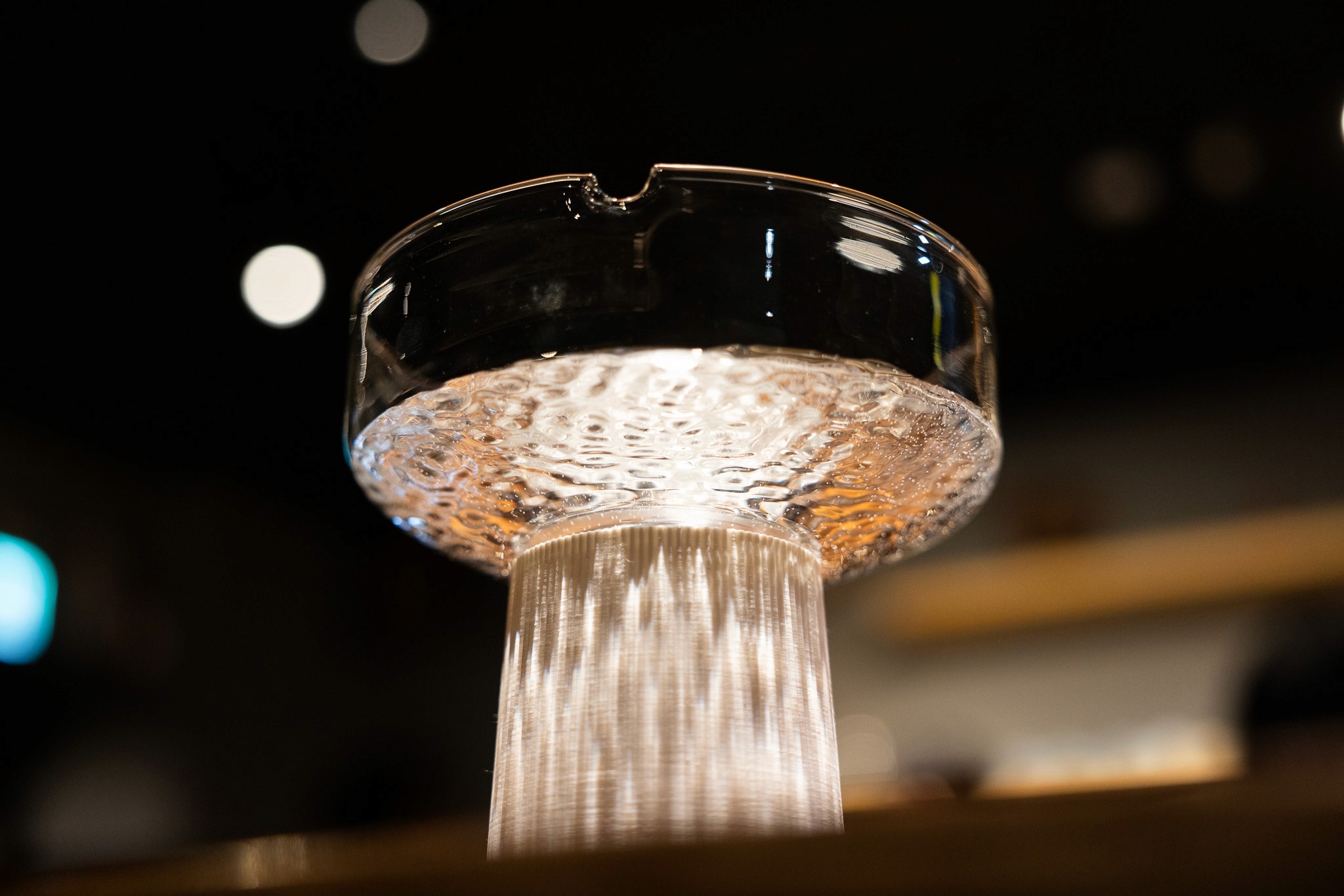
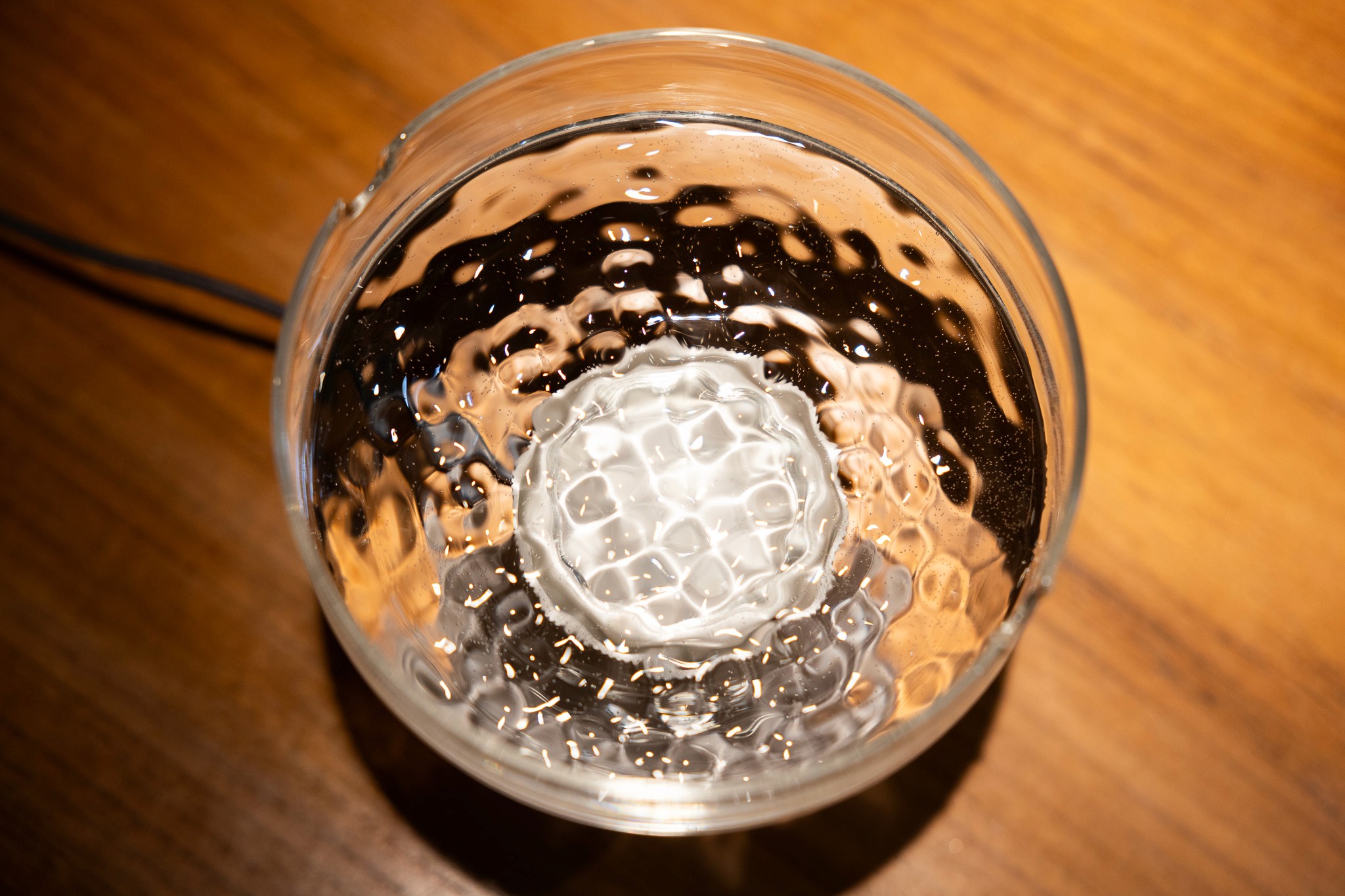
Cymatics Cup: Altering the flavor of beverages by visualizing sound vibrations.
💡 Cymatics is a scientific discipline focused on utilizing sound frequencies to generate patterns in liquids and particles.
Role | Lead, Ideation, Experimentation, Research & Publication
Duration | 1 year 6 months
Team | 1 Lead, 1 Product Designer, 2 Developers, 6 Advisors × TDFK Studio × Mixologist Pedison Kao
Location | Tokyo, Japan
✪ Publication | CHI’24 Full Paper, SIGGRAPH’25 Emerging Technologies, Leave a Nest Magazine Vol.33 (March 2024), Bar Without Blog
✪ Award | 61st Yoshinoya Award, World Class 2024: Top 3 in the world (Pedison Kao)
Background & Overview
In gastrophysics, previous research has shown that the static form of solid foods can shape how we perceive taste. However, how dynamic forms, especially in liquids, might influence flavor remains largely unexplored. Cymatics Cup investigates this gap by using sound vibrations to animate liquids and visualize taste through motion. Through a series of experiments and workshops, we explored how different vibration patterns could influence perceived flavor and enrich the overall drinking experience. The insights gained informed the design of tableware that translates cymatic principles into tangible multisensory dining artifacts.
Research
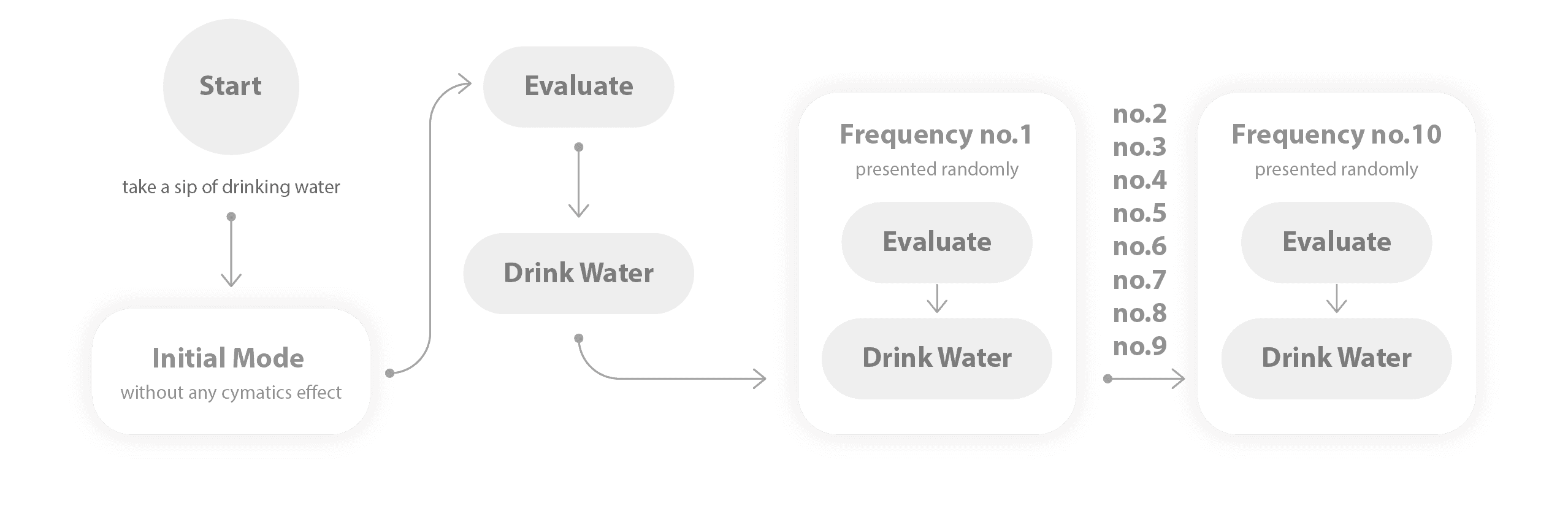
⦁ Experimental Procedure
A total of 10 cymatic frequencies ranging from 27.5 Hz to 659.2551 Hz were selected and tested in random order to examine their influence on the five basic tastes (sweet, sour, bitter, salty, umami).
Please click → UX Design: Tasymatic for more information about the experimental procedure.
⦁ Experimental Results
With 20 participants, through a one-way ANOVA we observed a significant overall effect of visual frequencies on bitterness ratings (F(10, 209) = 2.064, p = 0.029, η² = 0.090). Additionally, visual frequencies of 27.5 Hz resulted in a significant perception of bitterness compared to other frequencies.
In a separate collaboration with six award-winning bartenders, taste evaluation across 19 diverse beverages, ranging from non-alcoholic to alcoholic, was conducted using a structured sensory scale and visualized as radar graphs (results not public prior to paper publication).
From Proof of Concept to High-Fidelity Prototype
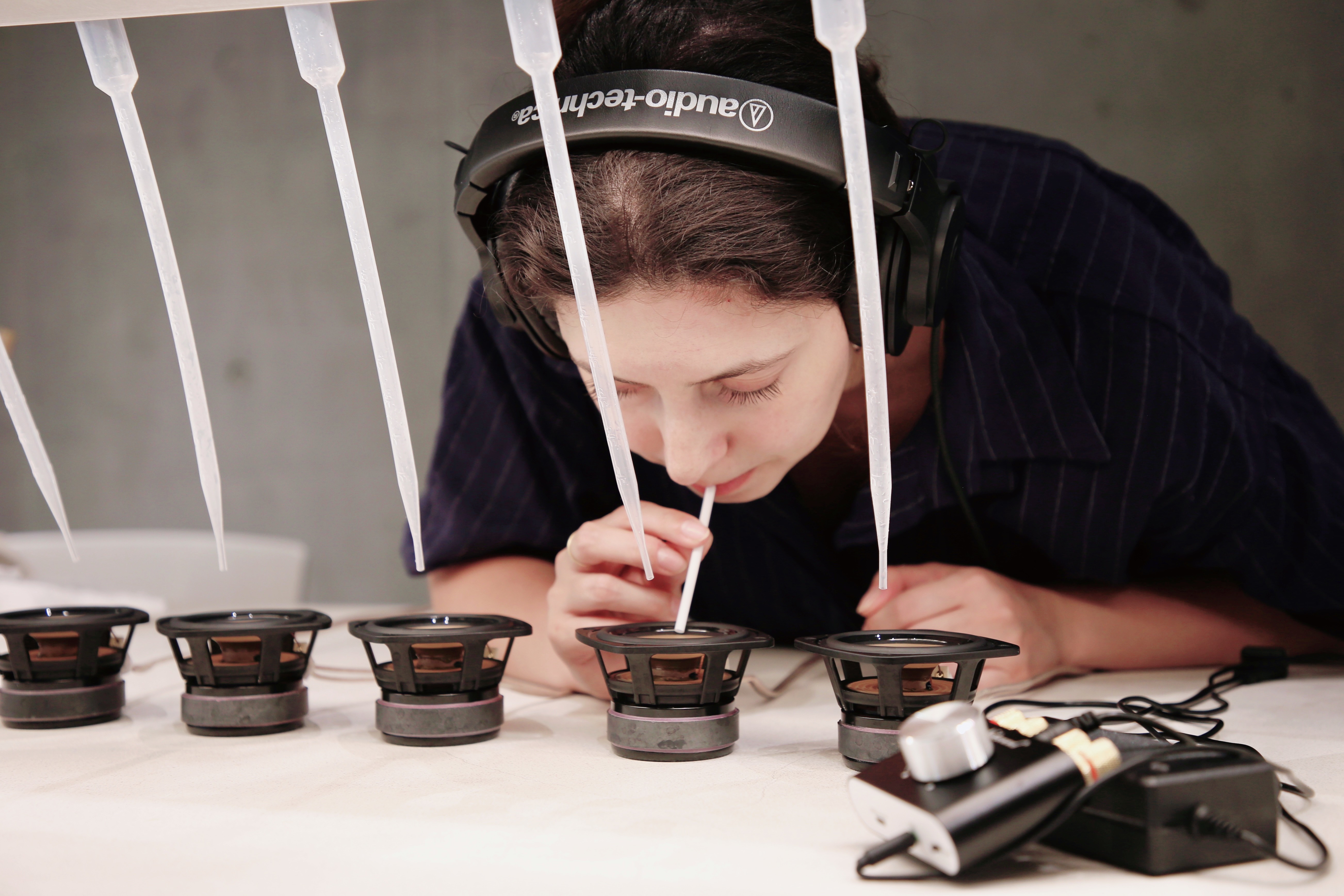
To quickly validate the feasibility of applying cymatics in a drinking context, we used the Z-Modena MK2, a waterproof loudspeaker, as a temporary drinking container during the user study experiment.
After confirming statistical significance, a series of prototype iterations began:
Version 2: A vibration speaker was used as the driving source for cymatic motion. The cup’s structural design separates the container from the vibration source, with the two components tightly sealed together but not molded as a single piece.
Version 3: Switched back to a loudspeaker and modified its diaphragm structure, integrating the container and the vibration source into a single unit.
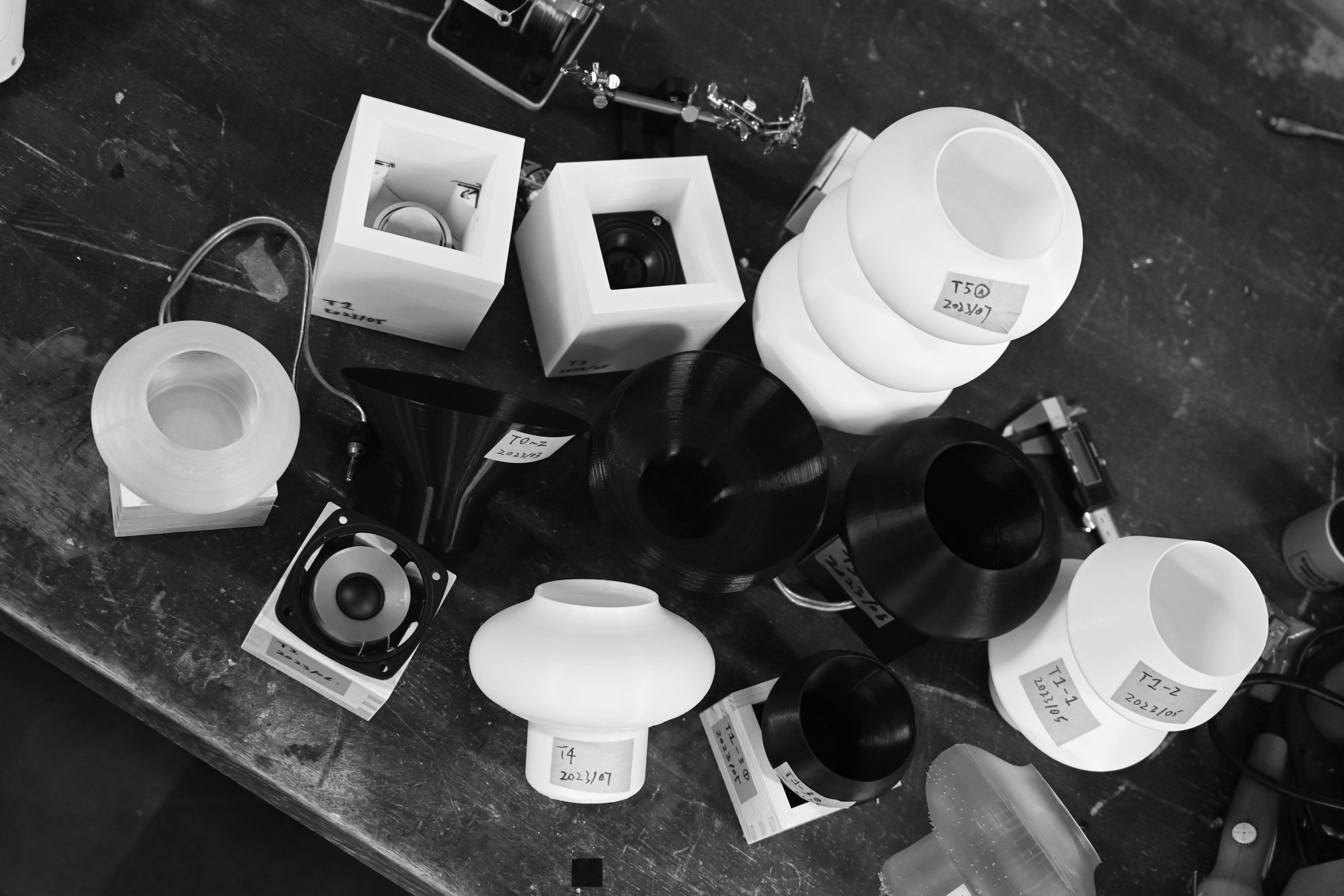
The Version 3 design revealed three key issues:
❶ Reduced Usability – An excessive number of voltage and current regulation components decreased user convenience.
❷ Limited Capacity – The diaphragm’s small size restricted the base area, reducing the beverage volume.
❸ System Instability – Driving cymatic motion demanded high current, which often disrupted Bluetooth communication with the loudspeaker.
We addressed these challenges by optimizing the final design of the Cymatics Cup as follows.
Final Design
⦁ Electronic Components | ✘ Reduced Usability → ✔ Miniaturized Components for Easier Use
The system utilizes a custom-designed circuit board, based on the ESP32, to wirelessly control the VP2 vibrator through the Open Sound Control (OSC) protocol. The VP2 vibrator generates low-frequency vibrations (ranging from 36 Hz to 65 Hz), which are transmitted through the container to form cymatics patterns on the liquid surface.
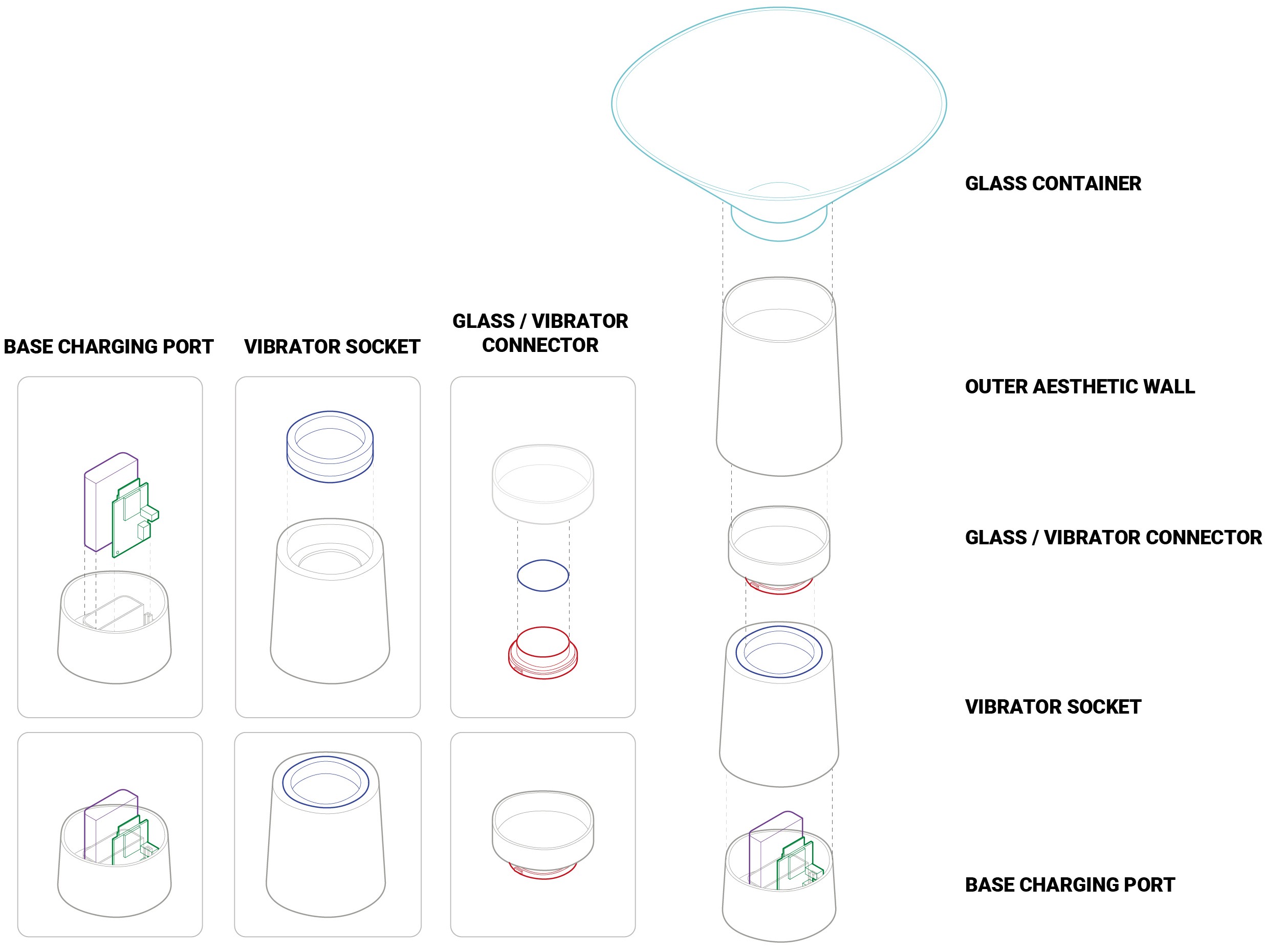
⦁ Structural Components | ✘ Limited Capacity → ✔ Separated Structure for Larger Volume
The weighted base houses the battery holder (three AAA batteries) and the circuit board, enabling bottom charging and easy battery replacement. A plastic socket with 5mm ethylene-vinyl acetate (EVA) foam allows the vibrator to oscillate freely while minimizing vibration transmission. The glass-to-vibrator connector ensures efficient vibration transfer for stable cymatics pattern formation.
⦁ Synchronization | ✘ System Instability → ✔ OSC Protocol for Stable Performance
The Max/MSP interface manages two audio outputs corresponding to cymatics patterns: bitterness (large and blurry) and sweetness (small and clear). Control messages such as /playloop and /stop are transmitted to the hardware via the udpsend object, ensuring real-time synchronization and precise control of patterns on the liquid surface.
⦁ Cymatics Cup x TDFK Studio
Top 3 in World Class Global Finals 2024
Real-World Application / User Scenario
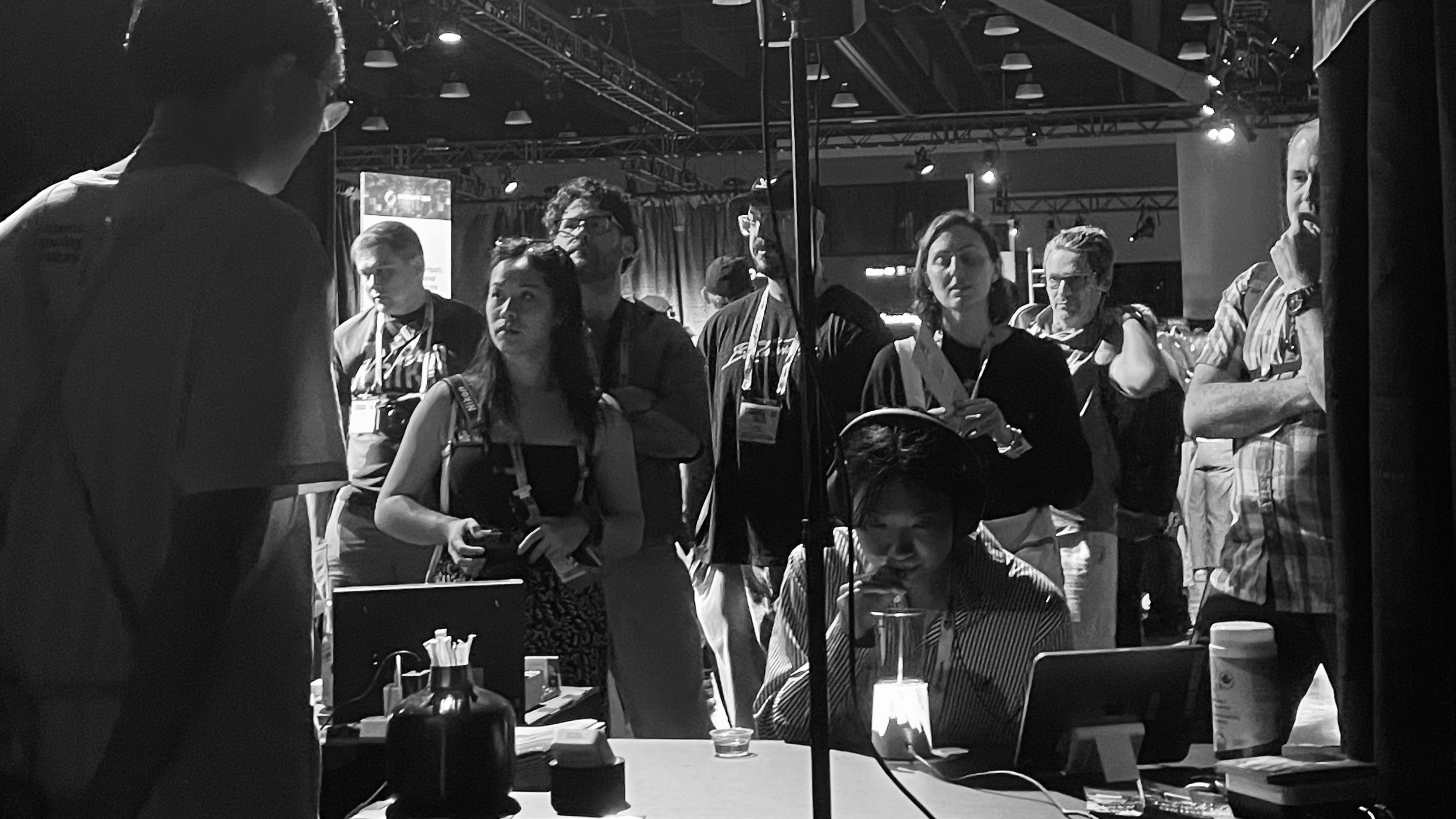
Renowned Taiwanese mixologist Pedison Kao, representing Taiwan as the national champion, participated in the World Class Global Bartender Finals 2024. During the Future Stride Challenge, Pedison used the Cymatics Cup to modulate the flavor profile of the cocktail, a performance that impressed the judges. He ultimately earned third place globally in the competition.
Please click → Bar Without: The Cymatics Cup for related coverage.
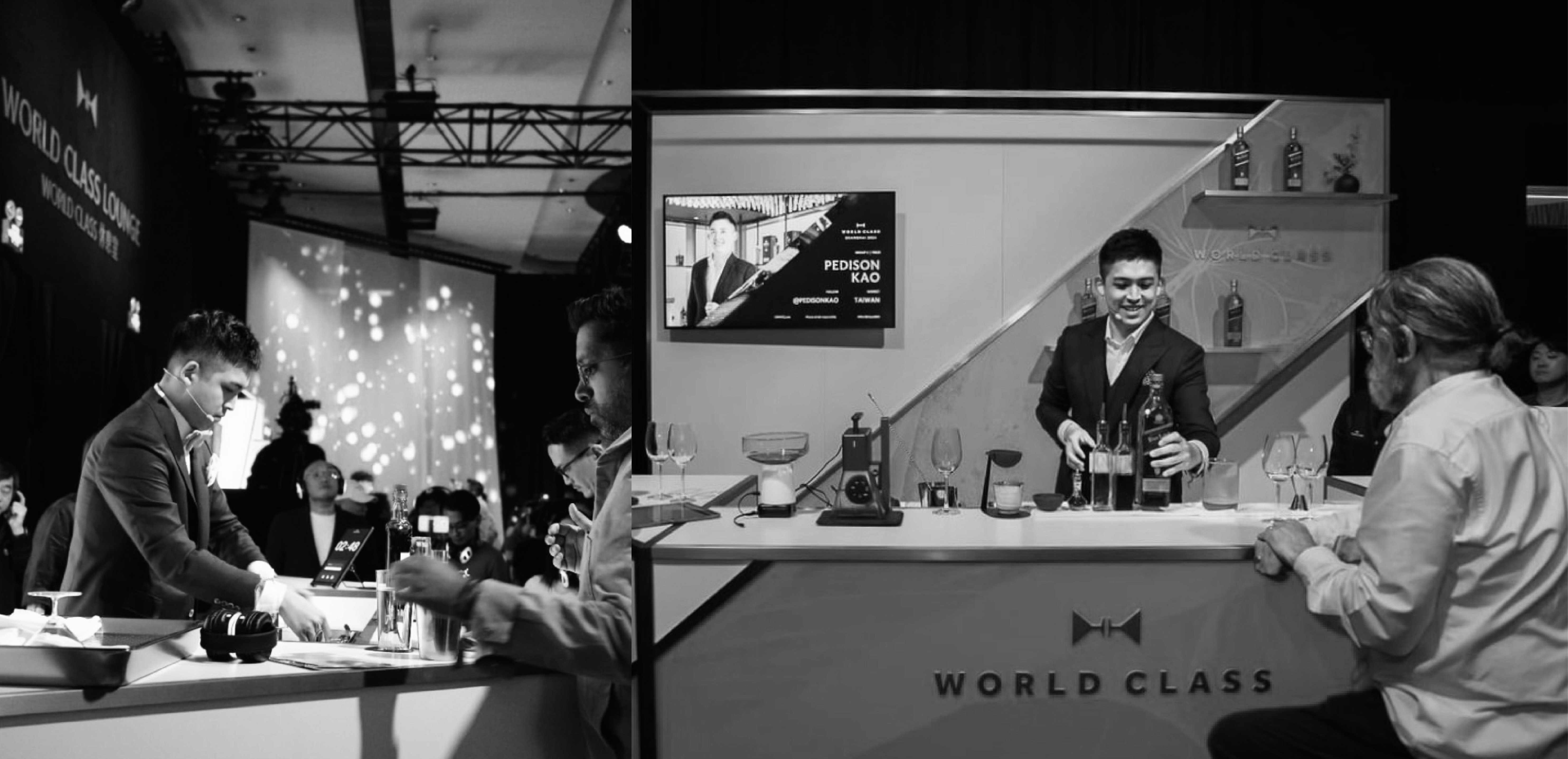
Mixologist: "The cymatic vibration enhanced the overall aroma of the London dry gin, amplifying its floral, citrus, and lemon-peel notes, softening dryness and alcohol sharpness, and slightly increasing perceived sweetness."
Toward Adjustable Taste Interfaces
Next Exploration
When the proof of concept for Cymatics Cup was completed, I envisioned a system that would allow users to actively tune their taste experience. Through an app, they could control vibration pattern in Cymatics Cup in real time, like a DJ or mixologist shaping flavor through rhythm and motion. This early concept, titled Tasymatic, illustrates the idea of user-adjustable taste interaction.
Please click → UX Design: Tasymatic for more details about this journey.
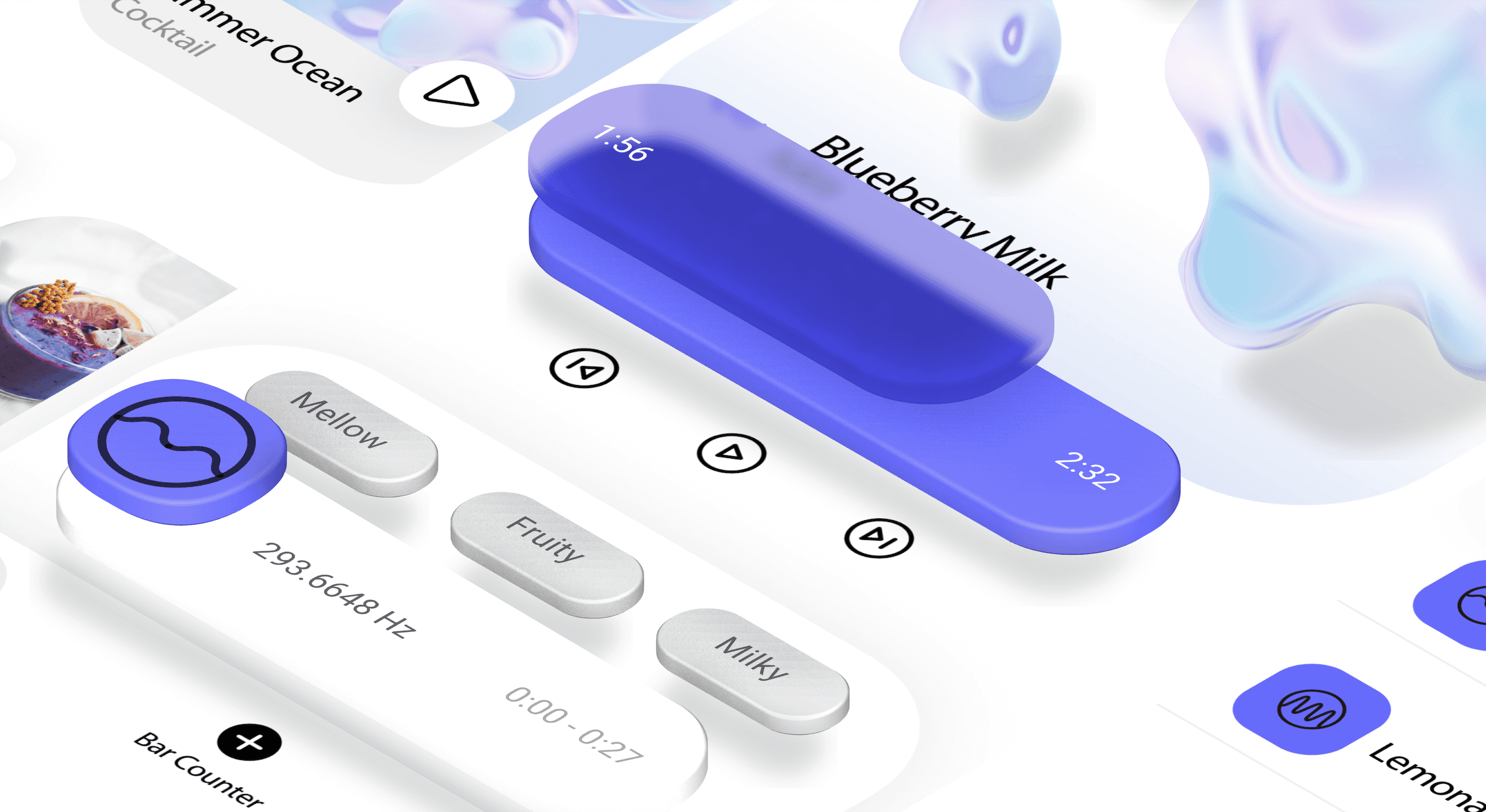
Building on this foundation, my next step is to investigate how such a customizable system could be realized. The goal is to clarify the mechanisms through which cymatics influence taste, including both the psychological effects of visual motion and the potential physical effects of vibration on the molecular structure of ingredients. Collaboration with food scientists could help validate these hypotheses. Once a clear sensory framework is established, I plan to develop systems that enable personalized taste adjustment, either by embedding control functions directly into the cup or by evolving the previous app concept into a more intuitive, tactile experience.
Retrospect
The Cymatics Cup marks a turning point in my journey from designer to researcher. It was my first academic project, and I began with little understanding of statistics, data analysis, or scholarly writing. Teaching myself experimental design and learning from research papers was slow but deeply rewarding. There were moments when I almost gave up. Tasymatic, the concept app, was created during that time as a way to return to design practice. Yet continuing this research became one of the most meaningful decisions I have made. My first paper was accepted at CHI, followed by another that received an Honorable Mention. That same year, I exhibited my work at Milan Design Week and SIGGRAPH. I still remember a visitor who, after tasting from the Cymatics Cup, exclaimed, “Wow! How did you do this? Discovering that cymatics can alter flavor is like Newton discovering gravity.” His words reminded me that while I may not be a Newton, small discoveries can still carry quiet significance. I am deeply grateful to the mentors, friends, chefs, bartenders, and participants who supported me throughout this journey. I am especially thankful to the engineers who brought the technical system to life and to TDFK Studio, whose design refined the visual and material aesthetics of the cup. Working closely with experts across disciplines taught me how diverse skills can harmonize into a single multisensory experience. Their collaboration and belief helped me grow, and this project continues to remind me why I study how design can move people through the senses.
ACM Publication
Weijen Chen, Kao-Hua Liu, Jiashuo Cao, Youichi Kamiyama, Sohei Wakisaka, Stefano Citi, Mark Billinghurst, Yun Suen Pai, and Kouta Minamizawa. 2025. Blooming Resonant Tea: A Multisensory Dining Experience with Dynamic Visuals and Music. In ACM SIGGRAPH 2025 Emerging Technologies (SIGGRAPH '25). Association for Computing Machinery, New York, NY, USA, Article 2, 1–2. https://doi.org/10.1145/3721257.3734024
Weijen Chen, Yang Yang, Kao-Hua Liu, Yun Suen Pai, Junichi Yamaoka, and Kouta Minamizawa. 2024. Cymatics Cup: Shape-Changing Drinks by Leveraging Cymatics. In Proceedings of the CHI Conference on Human Factors in Computing Systems (CHI ’24), May 11–16, 2024, Honolulu, HI, USA. ACM, New York, NY, USA, 19 pages. https://doi.org/10.1145/3613904.3642920
Photo credit: Bar Without, Pedison Kao and Weijen Chen